Rayon vs Linen: The Short Answer
They are two completely different fibres that happen to look similar in a shop photo.
- Linen comes from the flax plant. It is stronger, dries faster, breathes better and wrinkles far more.
- Rayon is made from wood pulp cellulose. It is softer, drapes better, wrinkles less — and dries slowly.
For humid summer heat, linen wins. For drape, softness and a dress that does not need ironing, rayon wins. Below is how to choose.
Is Rayon the Same as Linen?
No — and this is worth clearing up, because a lot of shoppers search for one thinking they are the other.
| Linen | Rayon | |
|---|---|---|
| Source | Flax plant fibre (natural) | Wood pulp cellulose (regenerated) |
| Feel | Crisp, cool, slightly rough at first | Soft, silky, smooth |
| Look | Textured, matte, relaxed | Smooth, fluid, often slightly shiny |
| Wrinkles | Very easily | Barely |
| Dries | Fast | Slowly |
| Breathability | Excellent | Very good |
| Care | Tough, machine washable | Delicate when wet |
Linen softens with every wash and lasts decades. Rayon feels wonderful from day one but demands gentler handling.
Which One Is Cooler in Summer?
Linen, in humid weather. The flax fibre wicks moisture and releases it into the air quickly, so the fabric stays dry against your skin. That is why linen shirts and trousers dominate Mediterranean and Southeast Asian summers.
Rayon, in dry heat. It absorbs sweat readily and never creases, so it looks better by the end of the day. But because it holds moisture, a humid afternoon can leave it feeling damp and clingy.
Which One Looks Better?
It depends on the outfit:
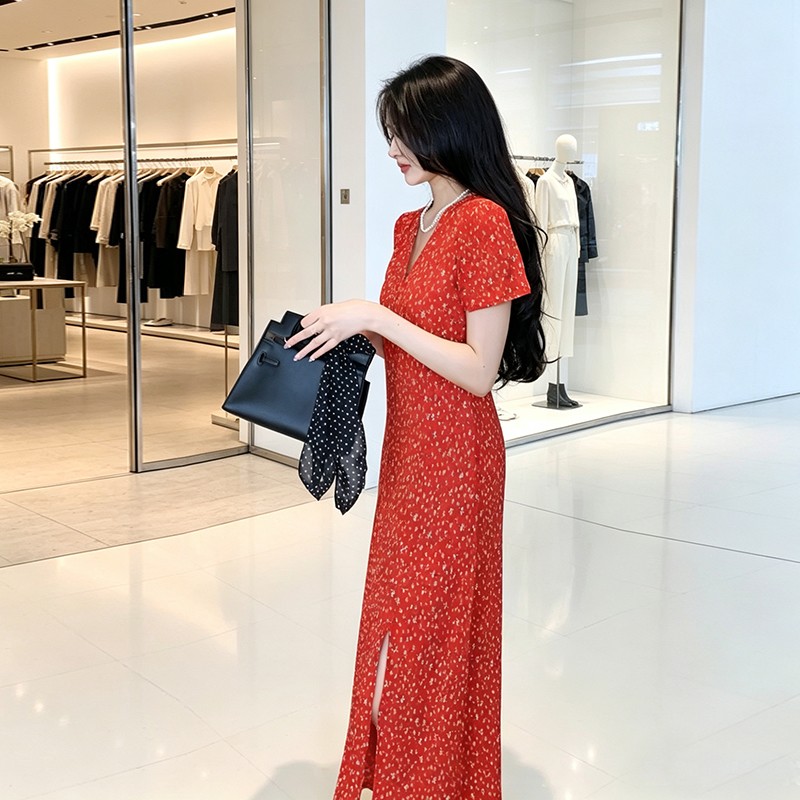
- Rayon drapes. It flows around the body and holds soft pleats and bias cuts well — which is why it dominates midi dresses, wrap tops and wide-leg trousers.
- Linen has structure. It holds a shape, reads as intentional and slightly formal, and looks better the more relaxed it gets.
If you want an elegant silhouette, rayon. If you want that deliberate, summery “I am on holiday” look, linen.
The Compromise: Rayon-Linen Blends
Most summer pieces in the shops right now are neither pure linen nor pure rayon — they are a blend. A typical mix is around half linen, half viscose rayon, and it does something neither fibre manages alone:
- Linen adds breathability and structure.
- Rayon adds softness and drape.
- Together they wrinkle less than pure linen and dry faster than pure rayon.
For most people most of the summer, a rayon-linen blend is the practical answer. If you want to go deeper on blends, read our guide to rayon-linen blends.
How to Tell Them Apart in a Shop
- Check the label. Linen, flax, or “100% linen” for linen. Viscose, rayon, modal or lyocell for rayon.
- Crush a corner. Linen creases sharply and the crease stays. Rayon springs back.
- Look at the light. Rayon has a subtle sheen; linen is flat and matte.
- Feel it cold? Both feel cool, but linen feels drier and slightly textured, rayon feels slick.
Care Rules That Matter
Linen: machine wash warm, tumble dry low, iron hot while damp. It gets better with age — do not baby it.
Rayon: cold water, delicate or hand wash, never wring. It loses strength when wet, so treat it like a fine knit. Dry flat or hang in the shade.
The Bottom Line
Rayon and linen are not rivals — they solve different problems. Buy linen when the air is thick and you want to stay dry. Buy rayon when you want drape and an easy, uncreased look. Buy a blend when you want one summer wardrobe that handles both.
We carry all three: linen and rayon trousers, dresses and tops.
Related reading: Is Rayon Hot to Wear? · Linen vs Cotton vs Rayon