Why Does Online Sizing Feel So Unpredictable?
Short answer: Because three variables change at once — size charts differ between brands, garments are drafted for one body proportion, and a photograph cannot show how fabric behaves on a real body in real movement. You cannot control the first two, but measuring your own body and reading each chart correctly removes most of the guesswork before you order.
If you have ever ordered a dress online that looked perfect on the model but fit like a different garment on you, you are not alone. Online sizing frustration comes from three sources: inconsistent size charts across brands, clothing designed for one body proportion, and the fact that a photograph cannot show how fabric behaves on a real body in real movement.
The solution is not guesswork — it is measurement. When you know your own dimensions and understand how to read a size chart, online shopping becomes far more reliable. This guide walks you through the four key measurements, how to read size charts, and how to interpret fit descriptions so you order the right size the first time.
What Are the Four Measurements You Need to Know?
Short answer: Bust, waist, hip, and torso length. Bust, waist and hip tell you whether a garment will close and sit in the right place, while torso length tells you where the hem will land on your frame. Measure all four over thin clothing, keep the tape parallel to the floor, and measure twice so one slip does not send you to the wrong size.
How Do You Measure Your Bust?
Short answer: Measure around the fullest part of your chest with the tape parallel to the floor, snug but not compressing, and wear the bra you normally wear under dresses — different bras change the number by up to an inch. On a V-neck or wrap front this is the most critical dimension.
Measure around the fullest part of your chest, keeping the tape parallel to the floor and snug but not compressing. Wear the bra you typically wear under dresses — different bras change your bust measurement by up to an inch. If the garment has a V-neck or wrap front, your bust measurement is the most critical dimension.
How Do You Find Your Natural Waist?
Short answer: Your natural waist is the narrowest point between your ribcage and hip bones, not where your pants sit. Bend slightly to one side and the crease that forms marks it. For high-waist pants and fitted dresses, this measurement decides whether the garment sits correctly or rides up.
Measure at your natural waist — the narrowest point between your ribcage and hip bones, not where your pants sit. Bend slightly to one side; the crease marks your natural waist. For high-waist pants and fitted dresses, this measurement determines whether the garment sits correctly or rides up.
How Do You Measure Your Hips?
Short answer: Measure around the fullest part of your hips and buttocks, typically 7–9 inches below your natural waist, keeping the tape parallel to the floor. This is the number that decides whether pants, skirts and A-line or fitted dresses pass over your hips before settling at the waist.
Measure around the fullest part of your hips and buttocks, typically 7–9 inches below your natural waist. Keep the tape parallel to the floor. This measurement is critical for pants, skirts, and any A-line or fitted dress that must pass over the hips before settling at the waist.
How Do You Measure Torso Length for Dresses?
Short answer: Measure from the top of your shoulder, where a neckline would sit, straight down to where you want the hem to end. That one number tells you whether a maxi dress will drag or a midi will hit mid-calf on your frame, because torso proportion varies independently of total height.
Measure from the top of your shoulder (where a neckline would sit) down to where you want the hem to end. This tells you whether a maxi dress will drag or a midi will hit mid-calf on your frame. Height alone does not predict this — torso proportion varies independently of total height.
How Do You Read a Size Chart Correctly?
Short answer: First work out which system the chart uses. Some brands list body measurements — your bust should be X for this size — while others list the garment’s own circumference. Match the right number to the right system, and a size chart stops being a guess.
Size charts list the garment’s measurements, not your body’s. Some brands list body measurements (“your bust should be X for this size”) while others list garment measurements (“the dress’s bust circumference is X”). Know which system the chart uses before you compare.
What Are the Reading Tips for Size Charts?
Short answer: Match body measurements directly to the listed range, but add 1–2 inches of ease to garment measurements before comparing. If you fall between two sizes, go up for fitted items and down for relaxed ones, and when two measurements disagree, prioritize the one that matters most for that garment type.
- Body-measurement charts: Match your measurement directly to the range. If your bust is 36″ and the chart says Size M fits bust 34–37″, you are a clear M.
- Garment-measurement charts: Add 1–2 inches of ease to your body measurement, then match. A dress with a 38″ bust circumference fits a 36″ body bust with comfortable ease.
- Between sizes: If you fall between two sizes, choose based on the garment’s style. Fitted items — go up. Relaxed items — go down or stay at the lower size.
- One measurement over the range: If your bust fits Size L but your waist fits Size M, prioritize the measurement that matters most for that garment type (bust for fitted tops, waist for high-waist pants).
What Do Fit Descriptions Like Relaxed or Fitted Actually Mean?
Short answer: Online fit labels translate into specific amounts of ease. Relaxed or loose means 3–5 inches beyond your body measurement, regular or true to size means 1–2 inches, fitted or slim means 0–1 inch, and over-sized means 5 inches or more. The label tells you how much room the pattern was built with.
Online stores use terms like “relaxed fit,” “regular fit,” and “fitted” — and these words carry real sizing implications.
- Relaxed / Loose fit: Designed with significant ease (3–5 inches beyond body measurements). You can safely size down if you prefer less volume.
- Regular / True to size: Moderate ease (1–2 inches). Your standard size should work.
- Fitted / Slim fit: Minimal ease (0–1 inch). If you are between sizes or prefer breathing room, size up.
- Over-sized: Intentionally large (5+ inches of ease). Size down unless you want dramatic volume.
At ZhiMo Trading, each product page includes a fit description and a detailed size chart. Our factory-direct model means the garments are produced consistently — the same pattern, the same fabric, the same grading — so the size chart is reliable across products, not just within one item.
What Are the Most Common Sizing Mistakes?
Short answer: The five most common sizing mistakes are assuming your usual size carries across brands, measuring over thick clothing, ignoring how much a fabric stretches, buying a size you hope to fit into rather than the body you have today, and trusting model photos instead of the garment’s length measurement.
- Using your usual size across all brands: Sizes vary between manufacturers. Always check the chart.
- Measuring over thick clothing: Measure over thin layers or underwear for accuracy.
- Ignoring fabric stretch: A stretchy fabric fits tighter measurements comfortably; a non-stretch fabric does not. Check the fabric description.
- Buying for aspiration, not reality: Ordering a size down “to motivate yourself” guarantees a garment you cannot wear. Order for the body you have today.
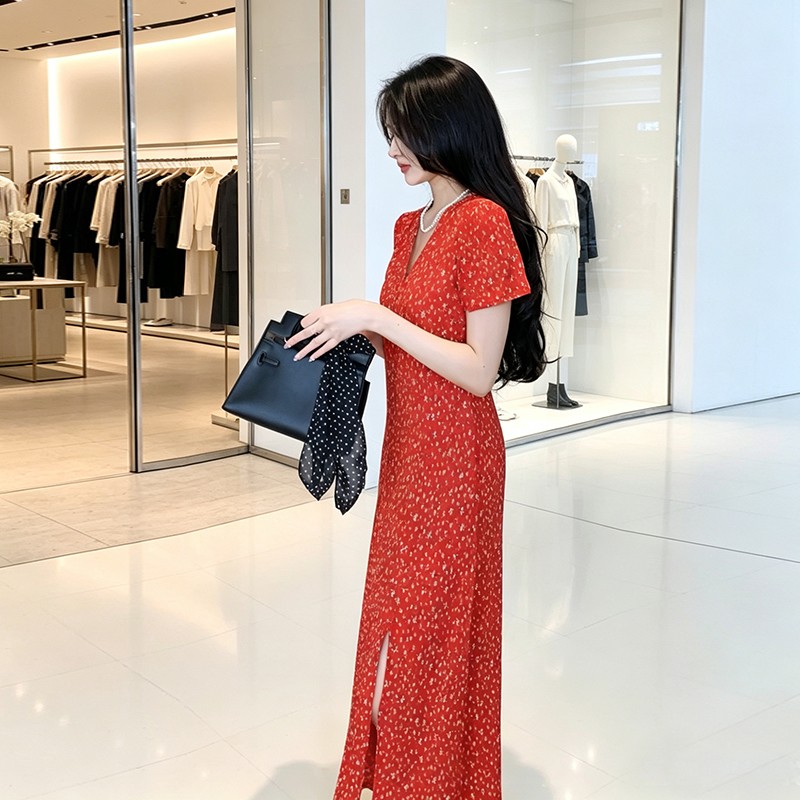
- Assuming model photos predict your fit: Models are typically 5’8″–5’11” with specific proportions. A maxi dress on a 5’8″ model will not look the same on a 5’3″ frame — check the length measurement instead.
What Should You Do When Your Size Still Does Not Work?
Short answer: Sometimes a piece still does not fit, because body proportions are more complex than four numbers can capture. ZhiMo Trading offers a straightforward exchange process so you can try the adjacent size, and customer reviews on each product page often reveal fit nuances that a chart cannot show.
Sometimes, despite careful measurement, a piece does not fit. This happens — body proportions are more complex than four numbers can capture. ZhiMo Trading offers a straightforward exchange process so you can try the adjacent size without friction. We also recommend reading customer reviews on each product page — real-body feedback from other buyers often reveals fit nuances that charts cannot.
How Can You Shop Online With Confidence About Sizing?
Short answer: Treat it as a four-step routine: measure yourself, read the size chart, check the fit description, and consider how the fabric behaves. When those four inputs align, your order fits the first time — and you stop returning dresses that looked perfect on the model but wrong on you.
Choosing the right size online is a skill, not a gamble. Measure yourself, read the chart, check the fit description, and consider fabric behavior. When these four inputs align, your order will fit. Browse ZhiMo Trading’s full collection — every item comes with a size chart and fit notes so you can shop with the confidence that your size will arrive right.
Frequently Asked Questions About Online Clothing Sizing
What are the four measurements I need for online clothes shopping?
Bust, waist, hip, and torso length. Bust, waist and hip are the three circumference measurements that decide whether a garment closes and sits correctly, while torso length tells you where the hem lands on your frame. Measure all four over thin clothing and keep the tape parallel to the floor for each one.
Where exactly is my natural waist?
Your natural waist is the narrowest point between your ribcage and hip bones — not the level where your pants sit. Bend slightly to one side; the crease that forms marks your natural waist. This number matters most for high-waist pants and fitted dresses, because it decides whether the garment sits correctly or rides up.
How much ease should I add when a size chart lists garment measurements?
Add 1–2 inches of ease to your body measurement before you compare. A dress with a 38″ bust circumference fits a 36″ body bust with comfortable ease. If the chart instead lists body measurements, match your number directly to the listed range — if your bust is 36″ and Size M covers 34–37″, you are a clear M.
Should I size up or down if I am between two sizes?
It depends on the garment’s cut. Fitted items — go up. Relaxed items — go down or stay at the lower size. If two of your measurements point to different sizes, prioritize the one that matters most for that garment type: bust for fitted tops, waist for high-waist pants.
Do different bras really change my bust measurement?
Yes — by up to an inch. That is why you should wear the bra you typically wear under dresses when you measure, rather than measuring in whatever you happen to have on. On a V-neck or wrap-front garment, the bust measurement is the most critical dimension of all.
How far below my waist should I measure my hips?
Measure around the fullest part of your hips and buttocks, which is typically 7–9 inches below your natural waist, with the tape parallel to the floor. This measurement is critical for pants, skirts, and any A-line or fitted dress that has to pass over the hips before settling at the waist.