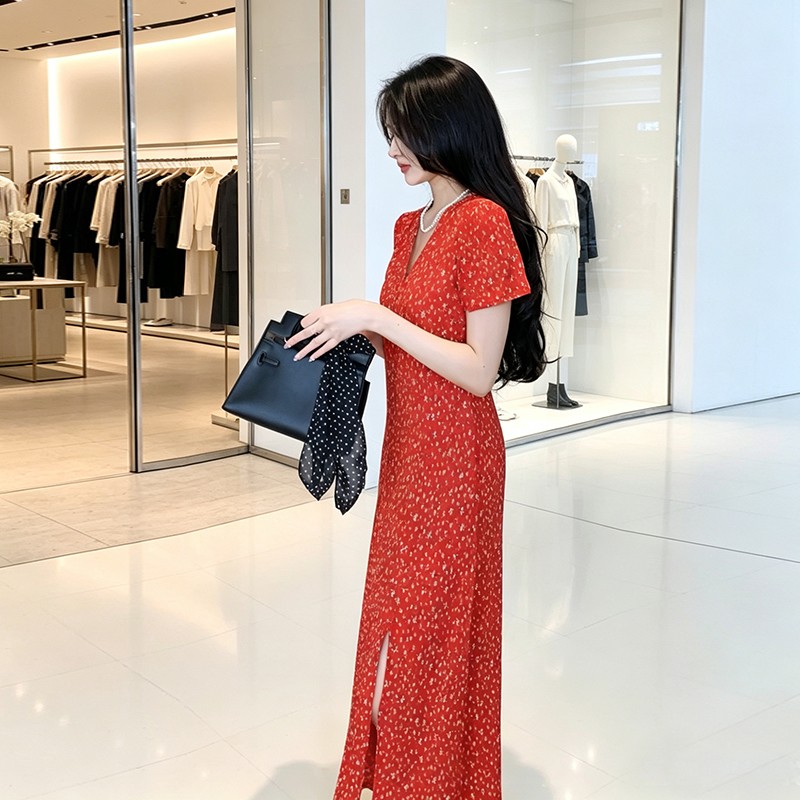
Why Layer in Summer at All?
Short answer: Because summer temperatures vary more than the weather report suggests. Air-conditioned interiors feel arctic, outdoor transitions swing between sun and shade, and evenings often drop about ten degrees after sunset. One fixed outfit cannot adapt to those shifts, so layers let you change your comfort and your outfit’s register in seconds.
Layering in summer sounds counterintuitive — more clothes in more heat? But the logic is the same as winter layering, inverted. In cold weather, you layer to trap warmth. In summer, you layer to manage variation: air-conditioned interiors that feel arctic, outdoor transitions that swing between sun and shade, and evenings that drop ten degrees after sunset. One fixed outfit cannot adapt to these shifts; layers can.
Summer layering also solves a style problem. A single tank top or sundress, while comfortable, can look incomplete — too casual for a restaurant, too bare for an office. A thoughtfully added layer changes the outfit’s register without changing its comfort. The trick is choosing layers that add visual interest without adding heat retention.
What Is the Fabric Rule for Summer Layering?
Short answer: Summer layers must do the opposite of winter layers: instead of dense, insulating fabrics you need open weaves, sheer constructions, and materials that air passes through. A simple test is to hold the fabric against the light — if you cannot see light through the layer, it will trap heat, which defeats the purpose.
Summer layers must do the opposite of winter layers. Instead of dense, insulating fabrics, you need open weaves, sheer constructions, and materials that air passes through. If you cannot see light through the layer, it will trap heat — and that defeats the purpose.
Which Fabrics Work Best for Summer Layers?
Short answer: Four families work: linen blends, which are structured enough to look like a real garment yet breathable enough for 90°F; sheer fabrics such as mesh, chiffon or sheer knit; lightweight gauze-weight cotton; and rayon, whose fluid drape moves away from the body instead of clinging, so even a full-length layer feels airy.
- Linen blends — structured enough to look like a real garment, breathable enough to wear in 90°F. Our relaxed linen-blend button-up shirt is a textbook summer layer.
- Sheer fabrics — mesh, chiffon, or sheer knit. They add dimension without insulation. The sheer zip-up lapel jacket creates a lapel-collar effect over any base while letting air circulate freely.
- Lightweight cotton — gauze-weight cotton cardigans and overshirts work in moderate heat.
- Rayon — its fluid drape moves away from the body rather than clinging, so even a full-length layer feels airy.
Which Fabrics Should You Avoid in Summer?
Short answer: Four fabrics to avoid: denim, which is too dense even in lightweight versions; polyester knits, which trap moisture and heat between layers; heavy cotton, since anything thicker than gauze weight feels suffocating; and neoprene or coated fabrics, which have zero breathability. All four work in winter and fail in summer heat.
- Denim — too dense for summer layering, even in lightweight versions
- Polyester knits — trap moisture and heat between layers
- Heavy cotton — anything thicker than gauze weight will feel suffocating
- Neoprene or coated fabrics — zero breathability
What Are the 5 Key Pieces for Summer Layering?
Short answer: A sheer collar jacket, a linen button-up shirt, a camisole dress with a matching cardigan, a lightweight scarf, and a wide-brim straw hat. The first three are body layers, the scarf is the smallest layer with the largest impact, and the hat is a shade layer that reduces perceived temperature by several degrees.
Why Is a Sheer Jacket the Best Summer Layer?
Short answer: Because it adds structure — lapels, a zip closure, a defined shoulder — while remaining thermally neutral. Wear it over a tank, a dress or a camisole and the outfit instantly reads as more intentional; remove it when the temperature spikes and the base outfit still stands on its own. No other layer is that flexible.
A sheer jacket with a collar — like our sheer zip-up lapel jacket — is the single most useful summer layer. It adds structure (lapels, a zip closure, a defined shoulder) while remaining thermally neutral. Wear it over a tank, a dress, or a camisole, and the outfit instantly reads as more intentional. Remove it when the temperature spikes, and the base outfit stands on its own.
How Many Ways Can You Wear a Linen Button-Up?
Short answer: Three ways from a single piece: worn open as a duster, buttoned as a shirt, or knotted at the waist as a cropped layer. Linen blends resist wrinkling slightly better than pure linen, which matters when you are pulling a shirt on and off multiple times in a day.
Worn open as a duster, buttoned as a shirt, or knotted at the waist as a cropped layer, a relaxed linen-blend button-up shirt offers three layering configurations from one piece. Linen blends resist wrinkling slightly better than pure linen, which matters when you are pulling a shirt on and off multiple times in a day.
Why Choose a Cardigan Set Dress for Summer?
Short answer: Because some dresses come with the layer built in. A camisole dress with a matching lightweight cardigan goes on for air-conditioned spaces and comes off for the patio, and because the color and print are coordinated, the cardigan looks designed rather than thrown on.
Some dresses come with a built-in layer. The leaf-print camisole dress with cardigan set pairs a breezy camisole dress with a matching lightweight cardigan — on for air-conditioned spaces, off for the patio. The coordinated color and print mean the cardigan looks designed rather than thrown on.
How Do You Use a Lightweight Scarf as a Summer Layer?
Short answer: A scarf is the smallest layer with the largest impact. Drape it over bare shoulders in a restaurant, tie it as a belt over a dress, or wrap it around your neck when the evening turns cool. It weighs nearly nothing and folds into any bag, so carry a semi-sheer one in a color that complements your base palette.
A scarf is the smallest layer with the largest impact. Drape it over bare shoulders in a restaurant, tie it as a belt over a dress, or wrap it around your neck when the evening turns cool. It weighs nearly nothing and folds into any bag. Choose a semi-sheer weave in a color that complements your base palette.
Does a Wide Brim Hat Count as a Summer Layer?
Short answer: Yes, but as a shade layer rather than a body layer. A straw hat shields your face, neck and upper shoulders from direct sun, and shade reduces perceived temperature by several degrees, which means you can spend longer outdoors before seeking air conditioning. It also finishes an outfit visually.
Not a body layer, but a shade layer — and shade reduces perceived temperature by several degrees. A straw hat shields your face, neck, and upper shoulders from direct sun, which means you can spend longer outdoors before seeking air conditioning. It also finishes an outfit visually, making a simple tank-and-pants combination look complete.
What Summer Layering Combinations Actually Work?
Short answer: Five combinations cover most summer days. For a casual day, a white tank with an open linen button-up, wide-leg pants and a hat. For the office, a camisole with a zipped sheer lapel jacket and a midi skirt. For evening, a floral midi dress with a sheer jacket and a scarf worn as a belt.
- Casual day: White tank + linen button-up (open) + wide-leg pants + hat
- Office: Camisole + sheer lapel jacket (zipped) + midi skirt + closed-toe flats
- Evening: Floral midi dress + sheer jacket + statement earrings + scarf as belt
- Travel: Maxi dress + linen shirt (knotted) + hat + scarf in bag for A/C moments
- Beach to dinner: Camisole dress + cardigan (off at beach, on at restaurant)
How Do You Remove Layers Gracefully in Summer?
Short answer: Choose pieces that fold small and still look good when partially removed. A sheer jacket can be draped over a bag strap, a linen shirt can be tied around the waist like a belt, and a cardigan can be folded into a tote. That way even the removed layer serves a visual purpose instead of becoming awkward cargo.
Summer layering is dynamic — you will put on and take off layers throughout the day. Choose pieces that fold small and look good partially removed. A sheer jacket can be draped over a bag strap. A linen shirt can be tied around the waist like a belt. A cardigan can be folded into a tote. The goal is that even the removed layer serves a visual purpose rather than becoming awkward cargo.
What Is the Smartest Way to Layer in Summer?
Short answer: Treat layering as adaptability, not accumulation. One sheer jacket, one linen shirt and one scarf handle the temperature shifts of an entire day without making you sweat. ZhiMo Trading sources these pieces factory-direct, so you can build a summer layering kit with quality fabrics and thoughtful construction at honest prices.
Summer layering is about adaptability, not accumulation. One sheer jacket, one linen shirt, and one scarf can handle the temperature shifts of an entire day without ever making you sweat. ZhiMo Trading sources these pieces factory-direct, so you can equip yourself with the right layers at honest prices — quality fabrics and thoughtful construction without the boutique surcharge. Build your summer layering kit and stay comfortable from morning coffee to late dinner.
Frequently Asked Questions About Summer Layering
What fabrics should I avoid when layering in summer?
Avoid four fabrics: denim, which stays too dense even in lightweight versions; polyester knits, which trap moisture and heat between layers; heavy cotton, since anything thicker than gauze weight feels suffocating; and neoprene or coated fabrics, which have zero breathability. All four keep heat in, which is the opposite of what a summer layer should do.
How many layers do I actually need for a summer day?
Three pieces cover it: a sheer jacket, a linen shirt, and a scarf. Together they handle the temperature shifts of an entire day without ever making you sweat. The sheer jacket adds structure and is thermally neutral, the linen shirt can be worn open, buttoned or knotted, and the scarf handles cool evenings and air-conditioned rooms.
How much cooler does it get after sunset in summer?
Evenings can drop about ten degrees after sunset, which is exactly why one fixed outfit stops working. That swing is the core argument for layering in summer: the same base outfit is comfortable at midday in full sun and again after dark once you add a sheer jacket or a scarf.
Which single summer layer is the most useful?
A sheer jacket with a collar. It is the single most useful summer layer because it adds structure — lapels, a zip closure, a defined shoulder — while remaining thermally neutral. Wear it over a tank, a dress or a camisole, remove it when the temperature spikes, and the base outfit still stands on its own.
What do I do with a layer once I take it off?
Choose layers that fold small and look good partially removed. A sheer jacket can be draped over a bag strap, a linen shirt can be tied around the waist like a belt, and a cardigan can be folded into a tote. The goal is that even the removed layer serves a visual purpose rather than becoming awkward cargo.
Does a wide-brim hat really keep you cooler in summer?
Yes, as a shade layer. A straw hat shields your face, neck and upper shoulders from direct sun, and shade reduces perceived temperature by several degrees, so you can spend longer outdoors before seeking air conditioning. It also finishes an outfit visually, which is why a simple tank-and-pants combination can look complete.